
Intelligence / Benchmarking
Learn from the right comparisons.
Compare market and construction evidence. We are also developing private benchmarking across your own projects and assets.
Discuss benchmarkingAn illustrative construction comparison
A useful range.
A considered assumption.
A cost rate only means something when you know what sits behind it. Follow a fictional residential project from comparison to a construction allowance.
Illustrative figures · not market evidenceSame cost.
Different denominator.
A £3m construction allowance looks like £3,000/m² on net area, but £2,500/m² on gross area. The building and budget haven’t changed.
Use the same area definition before comparing rates.
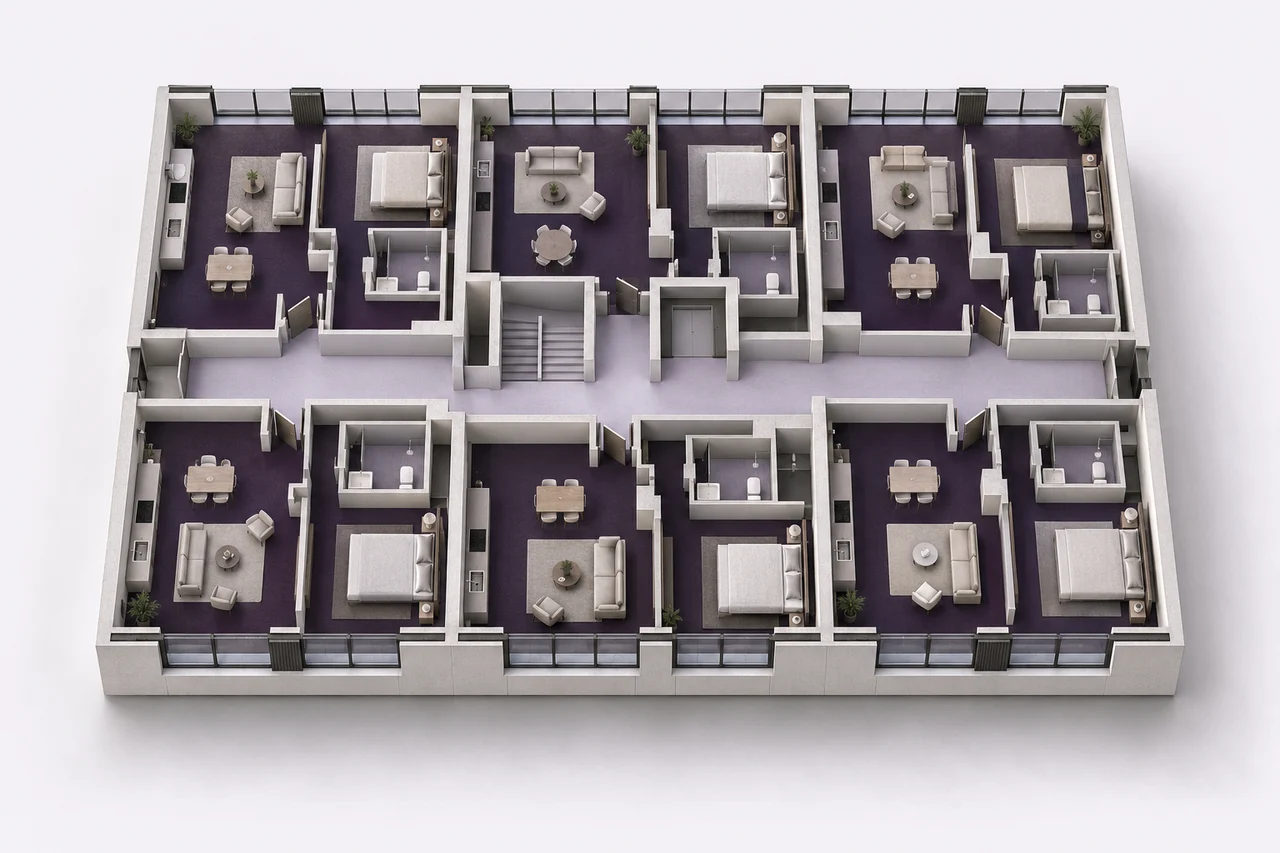
- £3m ÷ 1,000 m² net
- £3,000/m²
- £3m ÷ 1,200 m² gross
- £2,500/m²
Compare like with like.
Start with buildings that belong in the same conversation. Then look at the range.

- Place & period
- Same location and price date
- Type & specification
- Comparable residential buildings
- Area & scope
- Gross area · construction only
- Example A
- £2,200
- Example B
- £2,350
- Example C
- £2,500
- Example D
- £2,600
- Example E
- £2,800
Five invented allowances, on the same GBP price basis. Land, fees and finance are excluded. A range informs your judgment; it does not choose your specification.
See what your
choice changes.
For the same 1,200 m² project, try a higher construction allowance. See the effect before considering the rest of the appraisal.
The starting construction allowance.
Compare like with like.
Place, period, asset type, area basis and scope affect what a number means. Keep those differences visible.
Inform an assumption.
Use a comparison as evidence for judgment, then examine the financial consequences of the assumption you choose.
Learn from your own work.
We are developing private benchmarking so organisations can learn from their cases and performance. This is not a shared pool of customer data.