
Intelligence / Feasly Cost Index
Put construction costs in context.
Compare construction-cost benchmarks by market and building type. Establish a realistic allowance, then test its financial effect.
Discuss the Feasly Cost Index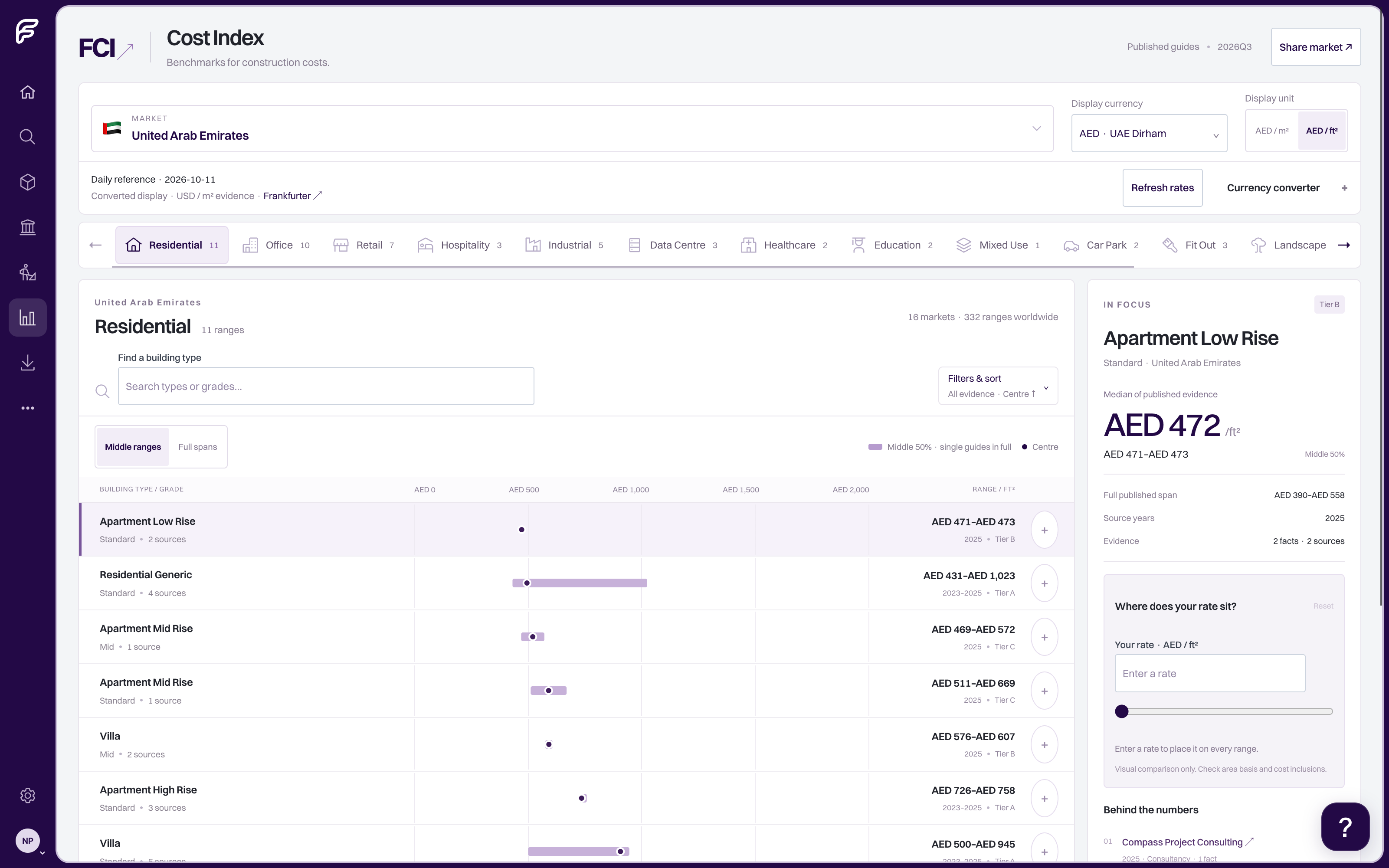
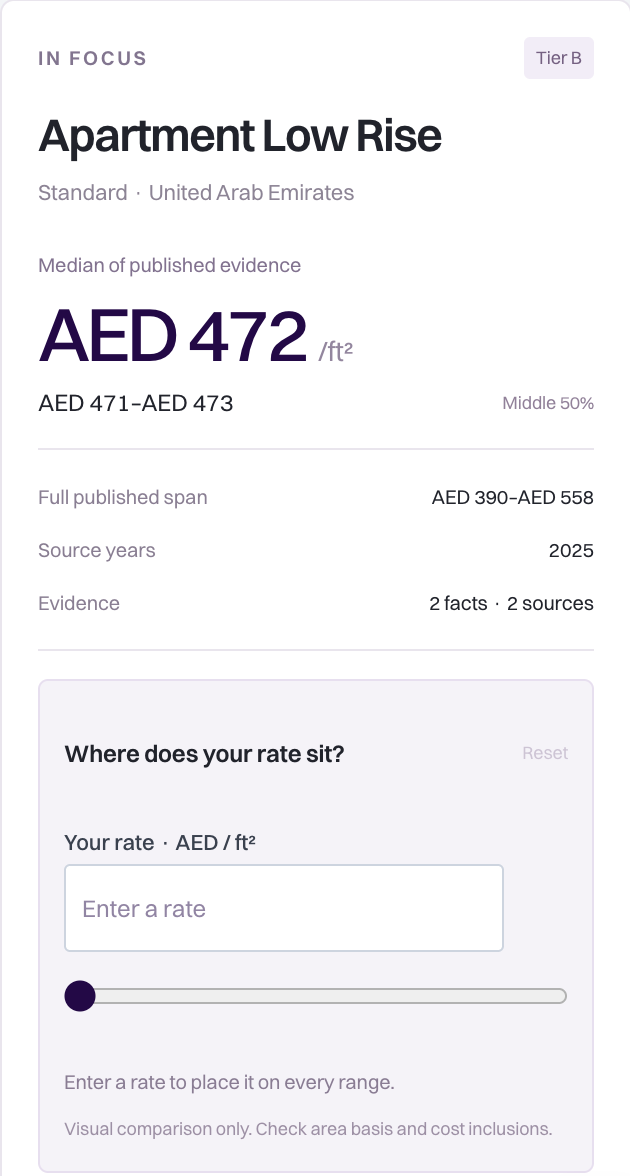
Find a useful range.
Examine the building type and grade relevant to the proposal. Understand what sits inside the construction allowance.
Understand the basis.
Source years, area units and included costs matter. A currency conversion changes the presentation currency; it does not update an older cost estimate.
Test the allowance.
Use the evidence to investigate a cost assumption, then explore its effect on the wider financial case.
From a cost benchmark to a project allowance.
How can Feasly construction-cost data support a feasibility study?
Use the Cost Index to research source-dated construction ranges by market and building type, then judge whether a range is relevant to the proposed scope. Check the source year, area measurement, specification and included costs before selecting an allowance. Carry the chosen assumption into the appraisal and test its effect on profit, cash flow and capital requirements. The benchmark helps frame an early budget; project-specific design and pricing establish what the work is likely to cost.
Does converting a benchmark into another currency update its cost year?
No. Currency conversion changes the presentation currency. It does not adjust the source year, local price movement, specification or measurement basis. Record those separately and explain any escalation or scope adjustment. This keeps a historical benchmark from appearing to be a current contractor quotation.