What to take into your next appraisal
- Distinguish a document being received from the underlying issue being resolved.
- Treat title, access and development permission as evidence questions, not cost assumptions.
- Carry verified site findings into the area schedule, programme and acquisition appraisal.
Identify the land and the interest being acquired
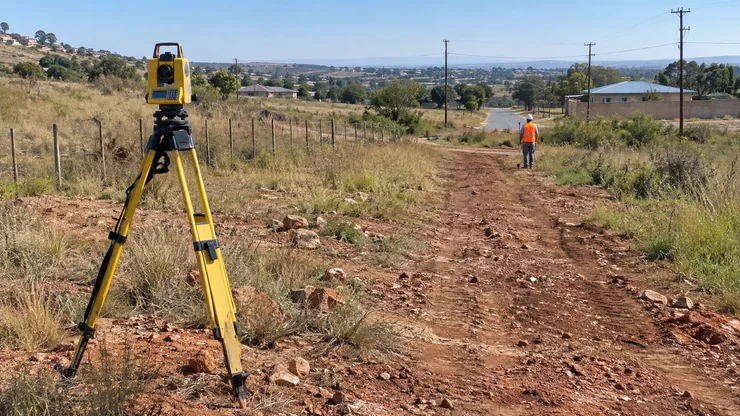
Start with the seller, parcel identifiers, surveyed extent and the legal interest offered. Freehold ownership, a long lease and a development right can carry different obligations and expiry risks. Instruct the relevant local professionals to confirm the interest, restrictions, existing charges, occupiers and rights affecting the proposal. A visually empty site is not evidence that it is legally unencumbered.
Keep the legal plan, topographical survey and design boundary reconciled. In England and Wales, HM Land Registry explains that the red edging on a title plan does not fix the exact legal boundary and should not be scaled to establish it. That is a specific warning about those records, not a description of every country's cadastral system.
Record the document version and the date of the check. A sales brochure, an older planning drawing and a current ownership record may describe different extents or interests. Resolve discrepancies before using an area to calculate saleable space or a price per unit of land.
Sources: HM Land Registry, England and Wales: How to read a title plan
Separate physical proximity from usable access and capacity
A road beside the boundary does not answer whether the proposed access arrangement is available for the intended use. Establish the rights, physical works and any third-party or authority steps involved. The same discipline applies to utility routes: a visible line nearby is not a connection offer or confirmation of available capacity.
Obtain the relevant technical and commercial evidence for water, power, drainage, telecommunications and other necessary services. Record connection points, capacities, routes, works, charges and expected dates. If the delivery programme depends on a third party, make that dependency visible rather than burying it within the construction duration.
Where an essential right or connection is unconfirmed, price is only part of the question. A financial allowance cannot create a right to cross another owner's land. The decision may need further evidence or a professionally drafted condition before the acquisition can safely proceed.
Test the proposal against local controls and site conditions
Identify the proposed use, massing, access, parking and infrastructure assumptions, then check them against the applicable planning position. Separate existing permission, an application in progress and an assumed future permission. Each is different evidence. A site can be physically large enough for a scheme while its developable area or permissible use is more limited.
In New South Wales, Australia, the government explains that a section 10.7(2) planning certificate identifies zoning, relevant controls and constraints such as contamination, flooding and bushfire-prone land. This is a jurisdiction-specific source of planning information, not a substitute for the required approvals or site investigations. Other locations require their own records and review process.
Commission investigations appropriate to the site and intended works. Ground conditions, contamination, flood exposure, demolition and retained structures can affect both design and cost. Identify the areas actually investigated and any reliance or scope limits. A report should narrow uncertainty; its presence alone does not mean every issue is closed.
Sources: NSW Government Planning Portal: Online section 10.7 Planning Certificate Service
Create one register that links findings to decisions
For each issue, record the evidence, responsible adviser, current status, next action and decision affected. Use specific status descriptions such as title report under review or connection offer awaiting acceptance. A single green tick labelled due diligence does not explain what remains conditional.
Give findings a route into the model. A setback changes the area schedule; a service upgrade changes cost and timing; an access constraint may change the scheme itself. Keep an unresolved fundamental constraint distinct from an ordinary cost risk. They require different decisions even if both appear in the same register.
| Issue | Evidence to resolve it | Decision or model consequence |
|---|---|---|
| Ownership and extent | Current legal records and reconciled survey | Confirm the interest and land included |
| Access | Adviser-confirmed rights and an agreed access design | Confirm deliverability before pricing works |
| Planning position | Relevant controls, permissions and adviser review | Confirm use, massing and conditions |
| Services | Capacity evidence, route and connection terms | Add works, charges and dependencies |
| Ground conditions | Appropriate investigations and costed response | Revise foundations, enabling works and risk |
Recalculate the deal when evidence changes its cost
Consider an invented, undiscounted acquisition screen in millions of one currency. Expected receipts are 13.00, the land price is 3.00, acquisition costs are 0.15 and other development costs are 7.00. The initial surplus is 2.85. The acquisition-cost allowance is a chosen amount, not a statement of any country's tax or fee rate.
Investigations and confirmed arrangements add a 0.60 service upgrade, 0.15 of access works and 0.30 of additional ground works. A three-month delay adds 0.09 of site holding expenditure. Assume these items were absent from the original budget, essential rights and approvals are resolved for this example, and receipts remain 13.00. Costs rise by 1.14 and the surplus falls to 1.71.
The screen excludes financing, tax beyond the stated acquisition allowance and the time value of money. A dated appraisal must also move the receipts and test funding during the delay. The example illustrates why site evidence belongs in the deal analysis; it does not set a purchase price or imply that an unresolved access issue is always fixable for money.
Decide what must be true before the next commitment
Close the review with the findings that support proceeding, the issues that change the price or proposal and those that still prevent a decision. Assign each outstanding action and a review date. Where a transaction is to depend on future events, have the appropriate adviser establish the contractual mechanism; a note in a spreadsheet does not bind the seller.
Preserve the evidence and assumptions used for approval. If a later document changes a site boundary, permission condition or service obligation, the team should be able to identify the affected design and cash-flow lines quickly. Good due diligence leaves a usable decision record for delivery as well as for acquisition.
Sources and further reading
- How to read a title plan HM Land Registry, England and Wales · Accessed 15 September 2026
- Online section 10.7 Planning Certificate Service NSW Government Planning Portal · Accessed 15 September 2026
Published by Feasly. How we prepare our guides. Suggest a correction.